
Crystallised Honey: 5 Important Things Every Honey Lover Should Know
June 11, 2026What is Crystallised Honey?
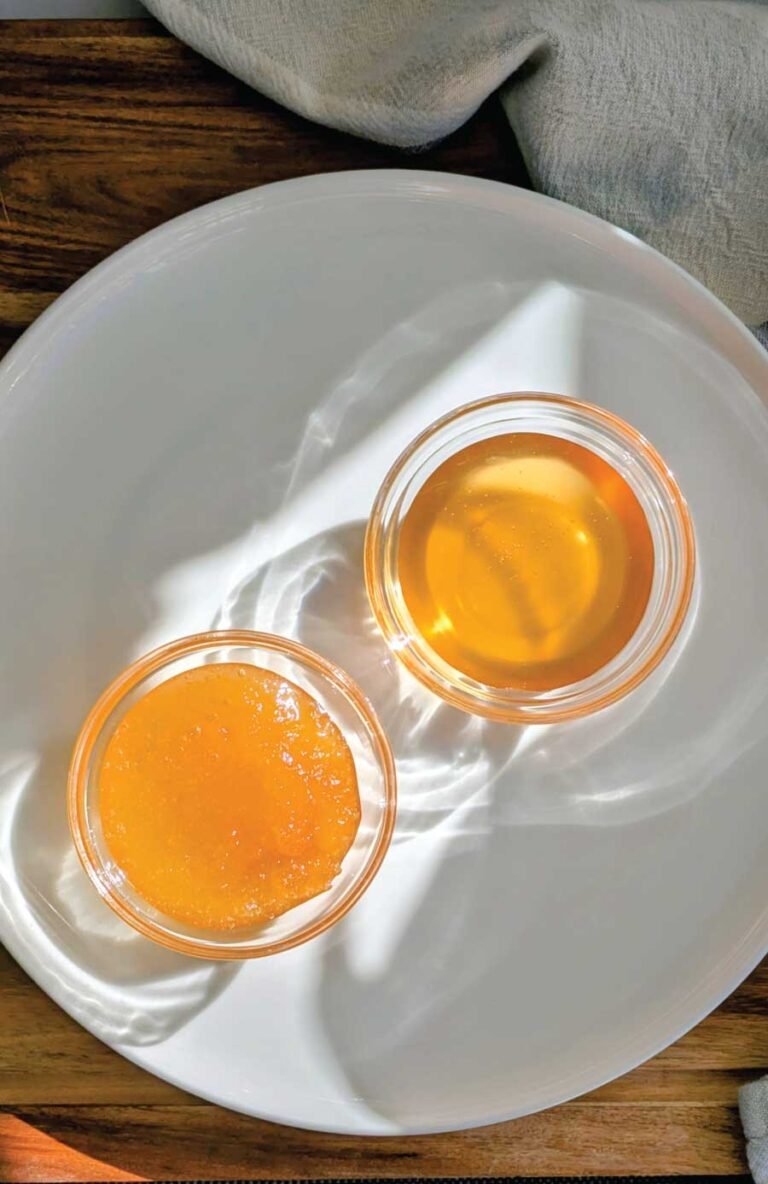
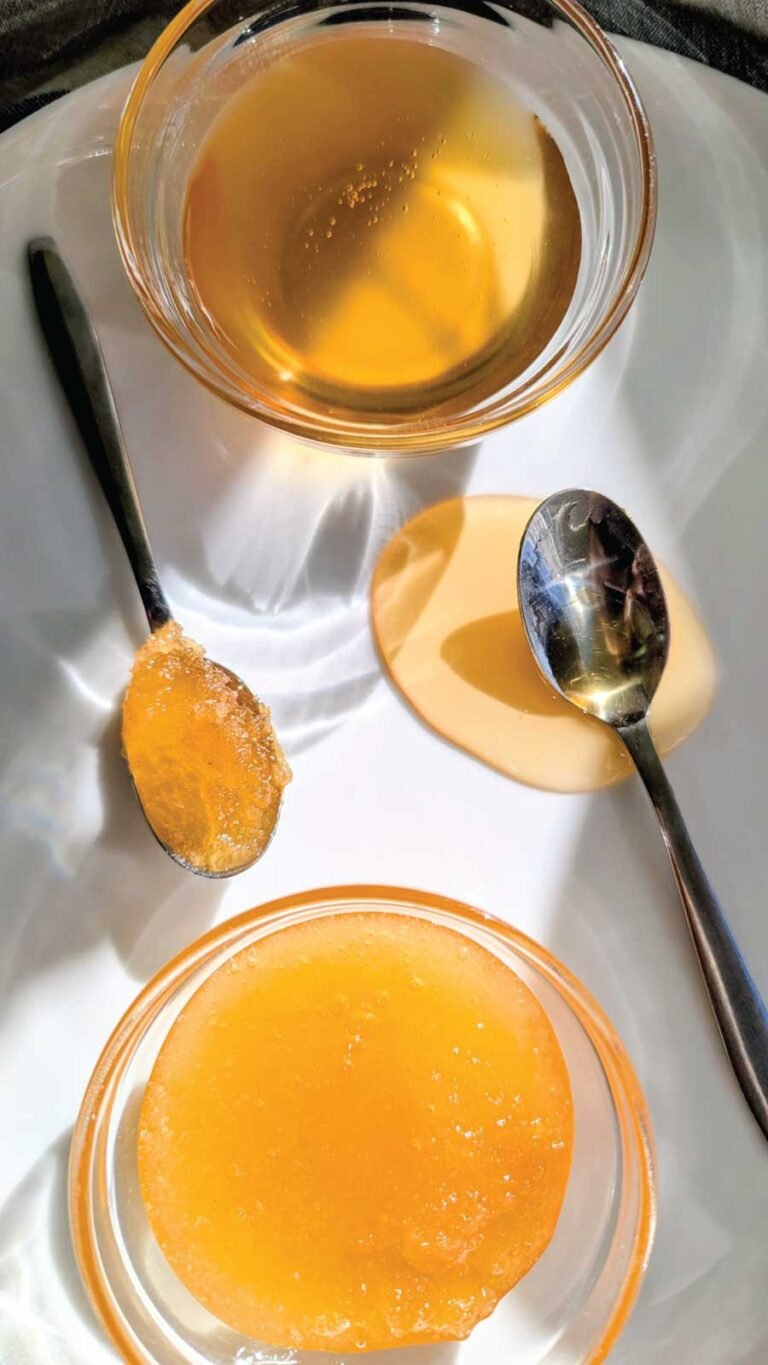
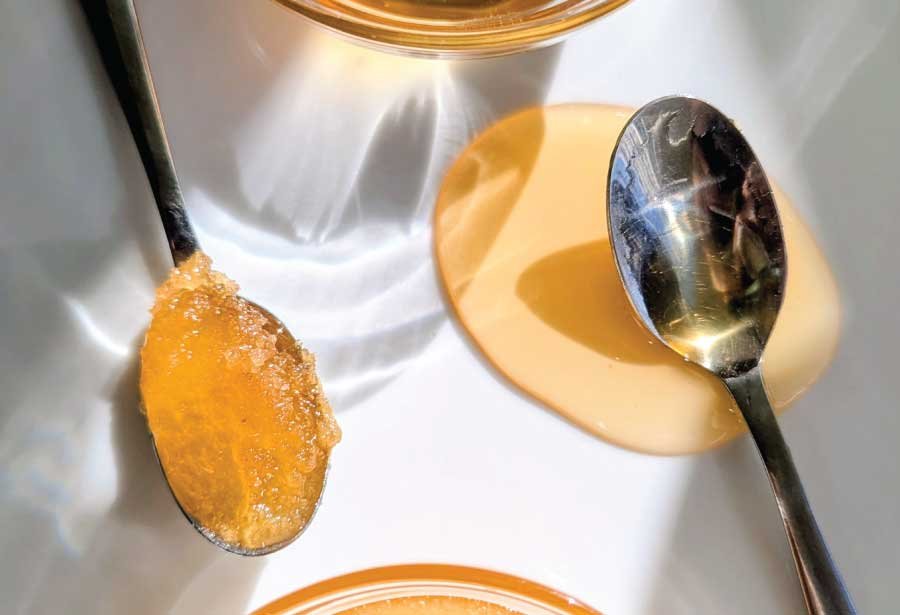
Every harvest I’m reminded that honey is an absolute sensory delight – it naturally comes in multitudes of flavours, textures, and colours. Curiously, raw honey can alter its texture even after the sticky job of extracting and bottling it. Crystallised honey (or candied honey) is simply the name for honey that has undergone a natural transition where the honey shifts from a clear, flowing liquid to a solid or semi-solid, granular state.
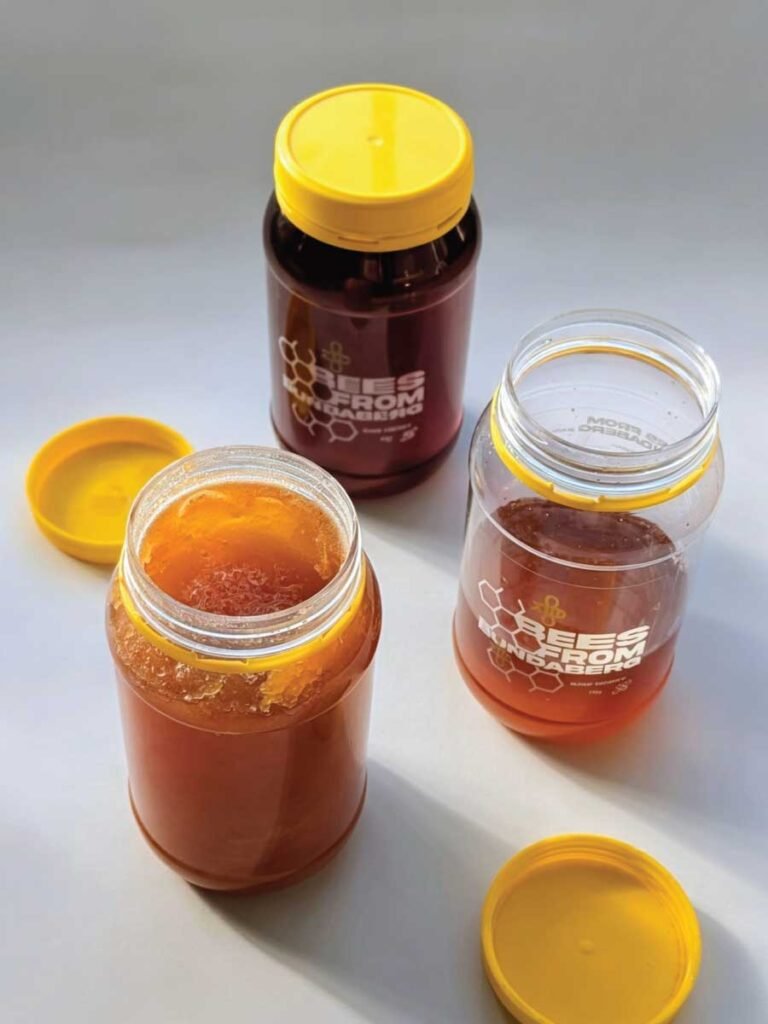
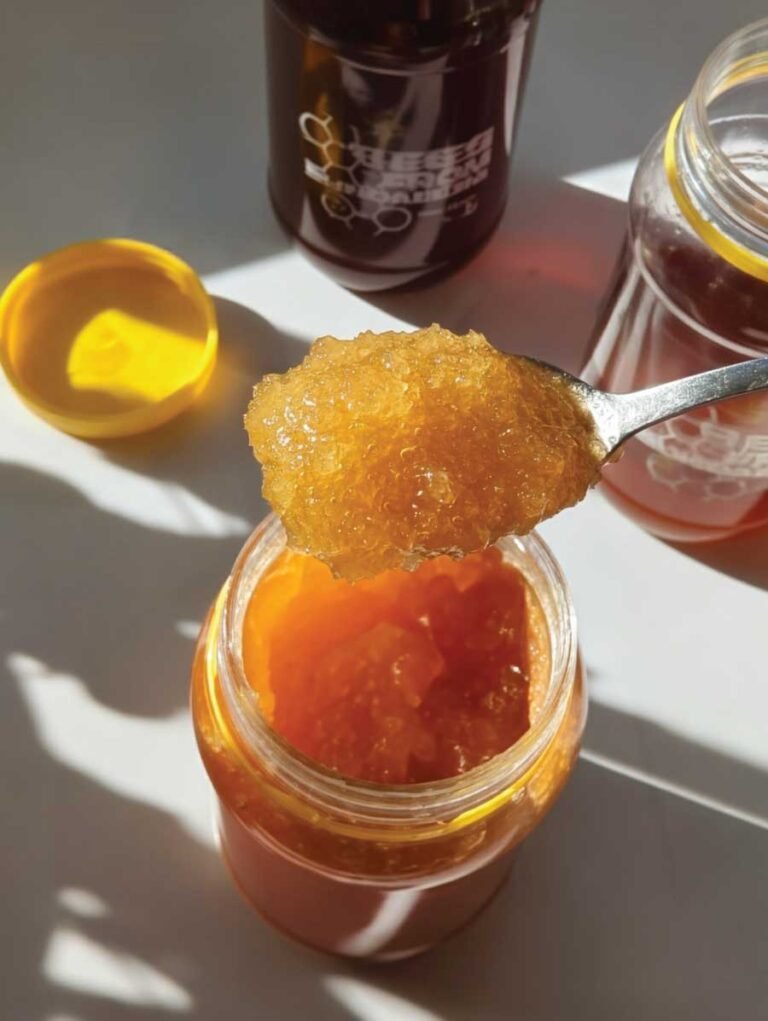
Visually, you’ll notice a distinct change: the clear, amber glow of the raw honey acquires a cloudy appearance that can look creamy or even opaque. You might even see visible crystals forming. This process, often called granulation or “candying,” changes the mouthfeel to something textured and grainy. While it looks different, it’s still the same pure honey, just in a more stable physical form.
Why Does Raw Honey Crystallise? – The Science in the Jar Explained Simply
When a bee visits a flower, she collects nectar – a sweet liquid rich in natural sugars. Nectar is primarily made up of water (70-80%), as well as sugars, and various proteins. But not all nectar is the same. Different flowers produce different sugar profiles, and that plays a big role in how honey behaves later on.
Back at the hive, bees process the nectar and then transform it into honey by slowly evaporating moisture from it until it becomes thick, dense, and very low in water content (under 18% water content). At that point, the sugars are packed tightly into a tiny amount of liquid – more than the water can permanently hold. This is what chemists call a “supersaturated solution”. Over time, some of those sugars, especially glucose, naturally begin “undissolving” and forming crystalls. That’s the process in a nutshell.
How quickly crystallisation happens depends largely on the flower source. Canola honey, for example, is naturally high in glucose, so it can crystallise within a few weeks. Yellow Box or Ironbark honey, on the other hand, contains more fructose, and therefore stays liquid for much longer.
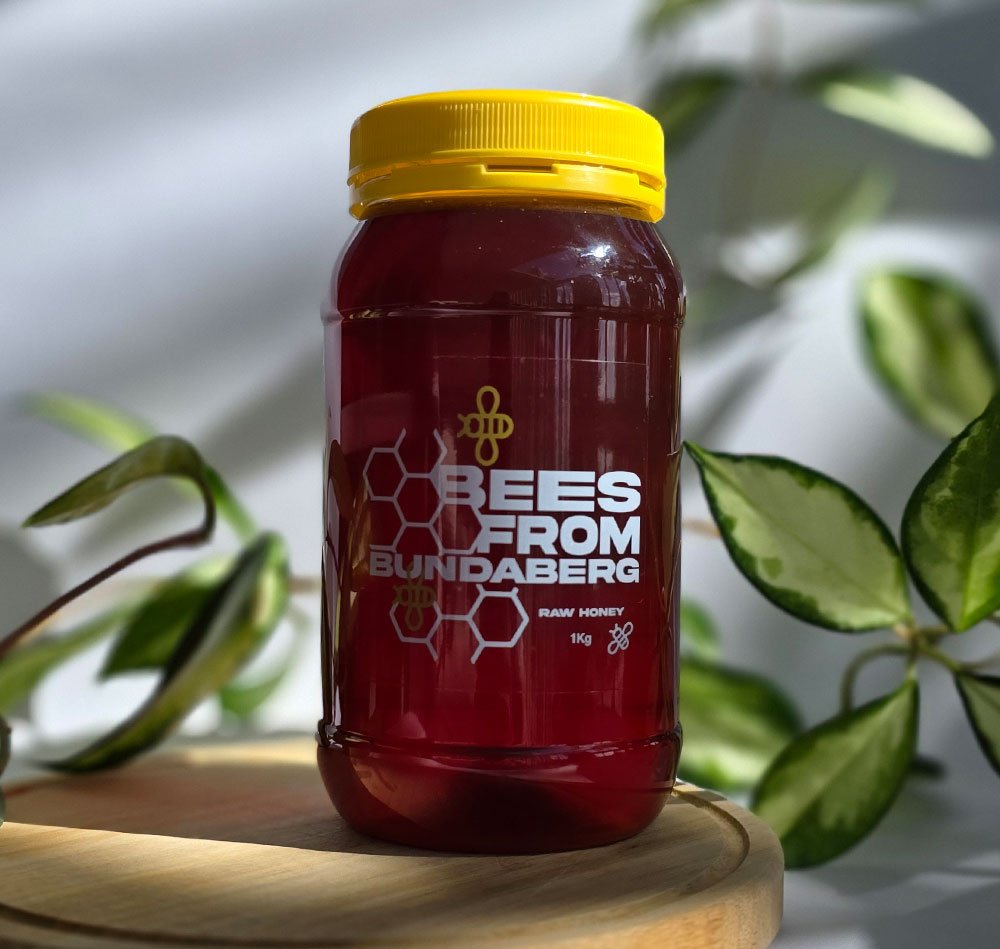
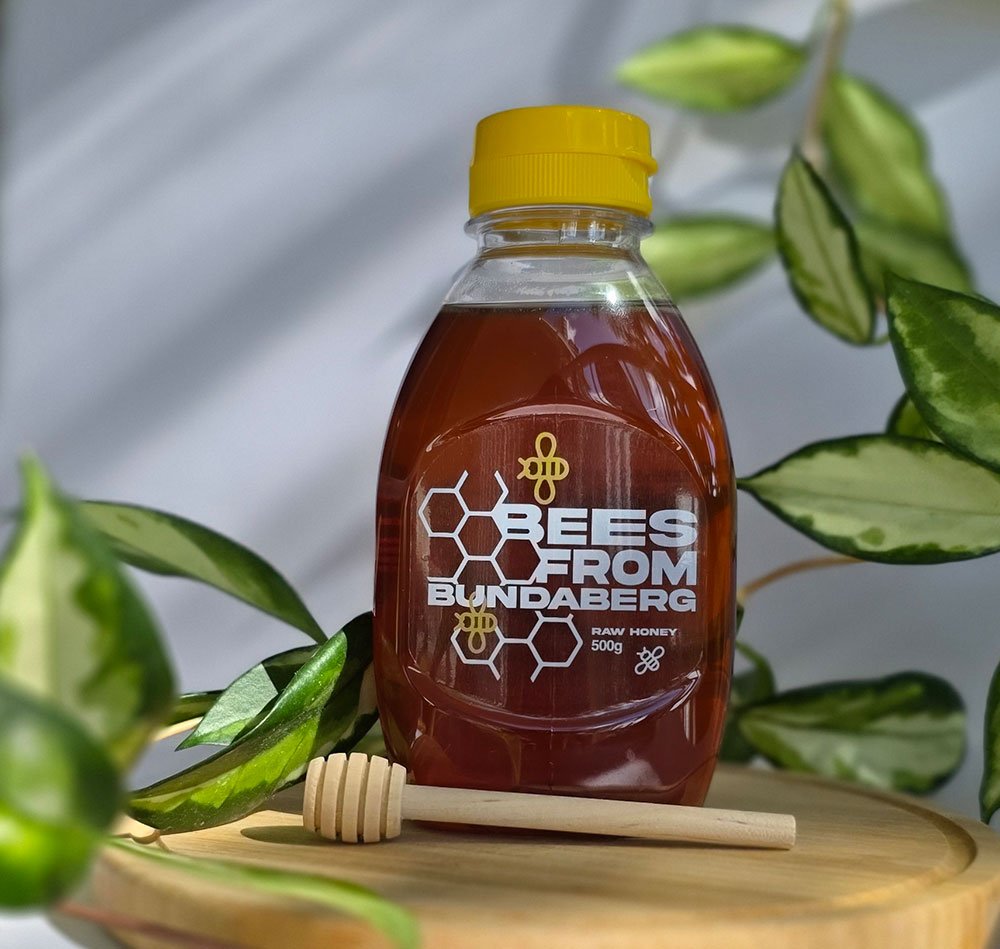
Raw honey also crystallises faster because it still contains tiny natural particles like pollen and traces of beeswax. These act as natural starting points for crystals to form around. Many supermarket honeys are heavily filtered and heat-treated, which slows crystallisation and keeps them liquid for longer – but it also removes the natural elements that make raw honey beneficial for our health. Our Bees from Bundaberg raw honey is only gently strained, so all of that goodness stays in.
Has My Honey Gone Bad? No, Crystallisation is a Quality Sign
I always tell folks that crystallisation is a quality marker – a sign of 100% pure, raw honey**. Anyway, **as long as it is sealed and kept away from excess moisture, raw honey doesn’t really have an expiration date. The high sugar, low water content and its natural antimicrobial properties make it shelf stable.
The only rule you need to respect is the airtight seal when you store raw honey. Honey is a natural humectant, meaning it draws moisture from the air. If the moisture content in honey increases drastically it can lead to fermentation. This is where the sugars convert to alcohol, and that is the only way honey truly spoils.
How to Prevent Honey from Crystallising: Slowing the Clock
It’s hard to completely avoid crystallisation, but you can try to slow it down. To keep raw honey liquid longer, follow these beekeeper tips:
- Keep it out of the fridge: The cold temperature accelerates the formation of stable crystals.
- Keep honey at room temperature: A dark cupboard that stays at room temperature (between 21°C–27°C) is the best way to delay the crystallisation process.
- Store in airtight glass container: honey absorbs moisture easily so be mindful of the seal, extra moisture makes honey susceptible to fermentation.
- Only use clean utensils: only dip perfectly clean, dry spoons and dippers into the honey jar. This avoids introducing any moisture and foreign particles that may speed up the crystallisation process.
The inevitable truth is that all raw honey will eventually crystallise. It may take years, or just a few weeks, but that’s the end state. It’s simply the sign of a natural, unprocessed product that hasn’t been “killed” by ultra-filtration or extreme heat.
How to Turn Crystallised Honey Back into Liquid: Warm it Gently
If you prefer a runny drizzle for your morning toast, you can return your honey to its liquid state. However, you must be patient. Honey contains delicate enzymes, polyphenols, and flavonoids that provide its health benefits. If you hit it with high heat, you kill the very things that make it “raw” honey.
To preserve the good stuff, use the Water Bath Method:
1. Place your airtight jar (lid on to keep moisture out) in a bowl or saucepan of warm water.
2. Use a thermometer to monitor the heat. To preserve the most delicate floral notes, 35°C to 40°C is the best.
3. Do not let the temperature exceed **45°C** and do not heat it for extensively long periods of time.
4. Let it rest until the crystals melt away, stir to mix occasionally, avoid splashing water into the honey, and your honey is clear and runny again.
**WARNING:** NEVER use a microwave or boiling water. Heating honey above 45°C destroys those beneficial enzymes, darkens the color, and ruins the floral aroma.
Beyond the Drizzle: Creative Ideas for Crystallised Honey
We encourage honey lovers to embrace the “crunch.” The unique texture of granulated honey is a culinary delight in its own right. Here are some ideas for how you can use your crystallised honey:
- Mess-Free Baking: It stays on the spoon and won’t “run away” while you’re measuring it out.
- Coffee or Tea Sweetener: The crystals melt easily when warmed in your brew, providing a unique honey flavor without the sticky mess of a drizzle.
- Breakfast Topper: It spreads easily and adds a little extra texture, or try it in your oatmeal with a dash of cinnamon.
- Sweet & Savory Toast: Try it over a layer of butter, pair with goat’s cheese, fresh tomatoes and basil, or make a sliced banana and peanut butter sandwich.
- Natural Exfoliant: Because honey is a humectant (drawing moisture in), the sugar crystals make for a perfect, hydrating skin scrub.
So, the next time you find a jar of crystallised honey, don’t see it as a flaw. See it as a testament to the hard work of the bees and a sign that you have the real, raw deal in your pantry. Enjoy that crunch!